


Alsace
Alsace lies in northeastern France, on the German border. It is a white-wine region: riesling, pinot gris, gewürztraminer, pinot blanc and muscat. Unlike in the rest of France, the grape variety is simply shown on the label here, on a tall, slender bottle.


Alsace wine, by grape variety
In Alsace, you choose a wine by the grape variety. We have a dedicated page for four of the most important grapes.
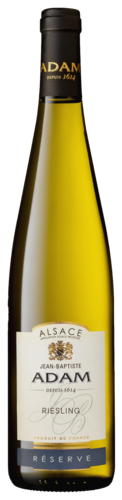
Riesling
Dry, mineral and with plenty of fresh acidity. In Alsace, usually fuller and drier than in Germany.
About riesling →
Gewürztraminer
The most aromatic white wine there is, full and rounded, often with a touch of sweetness.
About gewürztraminer →
Pinot gris
Light and fresh in Italy, full, spicy and ripe in Alsace. Read how the same grape can taste so different.
About pinot grigio →
Pinot blanc
The easiest white wine from Alsace: soft, fruity and a good match for many dishes.
About pinot blanc →French with a German accent
Alsace is a narrow strip of land between the Vosges and the Rhine, with Strasbourg in the north and Colmar in the middle. Throughout history, the region has switched from French to German and back again several times. You can see this in the villages with half-timbered houses, the German names of wine estates, and the grape varieties, which are also found in Germany. The vineyards lie on the eastern slopes of the Vosges, along the Route des Vins. The mountains block much of the rain, making it sunny and dry here. The grapes ripen slowly and well, producing wine with ripe fruit and fresh acidity.
Almost all wine from Alsace is white, and nearly always made from a single grape variety. That name appears on the label: riesling, pinot gris, gewürztraminer, muscat, pinot blanc or sylvaner. The only blue grape is pinot noir, used for light red wine and rosé. A blend of multiple grapes is called edelzwicker or gentil. The best vineyards may put grand cru on the label, along with the name of the vineyard. After a warm autumn, winemakers also produce sweet wine: vendanges tardives from late-harvest grapes, and sélection de grains nobles from grapes affected by noble rot. The region also produces a great deal of sparkling crémant d'Alsace. Note: a wine from Alsace can be dry, but it can also have a touch of sweetness. This is not always clearly stated on the label.
In brief
Seven bottles, from riesling to vendanges tardives
We start with crisp, dry wines and move towards full-bodied and aromatic styles. Then comes the region’s only red grape and a sweet wine made from late-harvest grapes.

Adam Riesling Pur-Granite
Riesling from granite soils. Lemon and grapefruit, followed by apple and pear, with a distinct aroma of wet stones.
Trimbach Riesling Réserve
A richer style of riesling, fruity and ripe, yet dry and balanced. Typical of this estate’s crisp style.
Trimbach Pinot Blanc
Approachable, subtle and refreshing, with low acidity. Yellow apple and ripe pear.

Adam Pinot Gris Réserve
Spicy and full-bodied, with tropical fruit and a slightly smoky note. A good example of how differently pinot gris tastes in Alsace.

Trimbach Gewurztraminer
Aromatic and spicy, with lychee, rose petals, honey and a hint of curry. You’ll love it or you won’t.

Trimbach Pinot Noir Réserve
Elegant, fruity and smooth red made from Alsace's only blue grape. Strawberry, raspberry and earthy notes.

Adam Pinot Gris Vendanges Tardives
Sweet pinot gris wine made from grapes left on the vine for extra long. This gives the grapes more sugar.
Why is riesling from Alsace different from riesling from Germany, and what about its sweetness? You can read about it on our riesling page.
Ripe fruit, flowers and spices
From lemon to lychee
Riesling smells of lemon, lime, green apple and wet stone. Pinot gris smells of pear, peach and a little smoke. Gewürztraminer is the most exuberant, with lychee, roses and spices. Muscat smells exactly like fresh grapes.
Full-bodied and ripe
Alsace wine is fuller-bodied than most white wine from northern France. Riesling remains crisp and fresh, while pinot gris and gewürztraminer are round and creamy, sometimes with a hint of sweetness. Pinot blanc falls somewhere in between.
Long and spicy
A good riesling finishes fresh and mineral. Pinot gris and gewürztraminer have a longer, warm finish with a spicy note, which can be slightly bitter in gewürztraminer.
Flavor profile of an average riesling from Alsace. A gewürztraminer or pinot gris scores higher in sweetness and intensity and lower in freshness; a vendanges tardives is truly sweet.
How to serve Alsace wine
Light white wine chilled, full-bodied white wine slightly warmer, pinot noir slightly chilled and sweet wine in a small glass.
White at 8 to 12 degrees
Serve pinot blanc, muscat and riesling at 8 to 10 degrees. Pinot gris and gewürztraminer are fuller-bodied and can be served slightly warmer, around 10 to 12 degrees. Too cold, and you can barely smell the flowers and spices. Take the bottle out of the fridge fifteen minutes before serving.
More about wine temperature →Pinot noir slightly chilled
Pinot noir from Alsace is a light, fruity red wine. Serve it at around 14 degrees, so give it half an hour in the fridge. This keeps the red fruit fresh. At room temperature, it quickly becomes flat.
More about pinot noir →Let it rest or give it air
A good riesling or grand cru can age for years, developing notes of honey and sometimes a hint of petroleum. A young, full-bodied grand cru benefits from fifteen minutes of air in a decanter. Serve sweet vendanges tardives chilled, in small portions.
More about decanting →Alsace wine at the table
Alsatian cuisine is hearty: sauerkraut, pork, flammekueche and strong cheese. The region's white wines are full-bodied enough to stand up to these dishes. They are also a good choice with spicy Asian food.
Sauerkraut and fish
Riesling is the classic choice with choucroute, sauerkraut with sausage and bacon. It also pairs with fish, shellfish, white meat and cheese fondue.
Flammekueche and asparagus
Pinot Blanc is delicious with flammekueche, quiche and other egg-based dishes. Pinot Blanc and dry Muscat also pair well with asparagus, a challenging vegetable for many other wines.
Spicy and Asian
Because of their richness and sometimes a touch of sweetness, Pinot Gris and Gewürztraminer pair well with mildly spicy Asian dishes, curry and satay. Gewürztraminer with Munster cheese is a regional classic.
Mushrooms and foie gras
Pinot Noir pairs well with mushrooms, poultry and charcuterie. Serve a vendanges tardives or sélection de grains nobles with foie gras, blue cheese or a fruit dessert.
The right glass for Alsace wine
Drink Riesling and Pinot Blanc from a medium-sized white wine glass. For aromatic wines such as Gewürztraminer and Pinot Gris, the bowl can be more generous, allowing the aromas to develop. Serve sweet wine in a small glass. These are the glasses we recommend ourselves.


Everything you still wanted to know about Alsace wine
Can't find your question here? Read more about wine and food, or get in touch.
To wine and food →What is Alsace wine?
Which grapes are grown in Alsace?
Is wine from Alsace dry or sweet?
How much alcohol is in Alsace wine?
What is the difference between pinot gris and pinot grigio?
What do you eat with Alsace wine?
Buy wine from Alsace
Want the bottle at home right away? Order wine from Alsace online at Gall & Gall. Gall & Gall has 31, 8 of which are on offer.

Adam Pinot Blanc Pur Granites Organic

Adam Pinot Gris Les Natures
Trimbach Pinot Blanc

Adam Auxerrois Vieilles Vignes
Prices as of October 9, 2026, as provided by Gall & Gall. You can see the current price and stock at Gall & Gall. Glazen.nl receives a small commission if you buy something through these links; you pay nothing extra. No 18, no alcohol.